

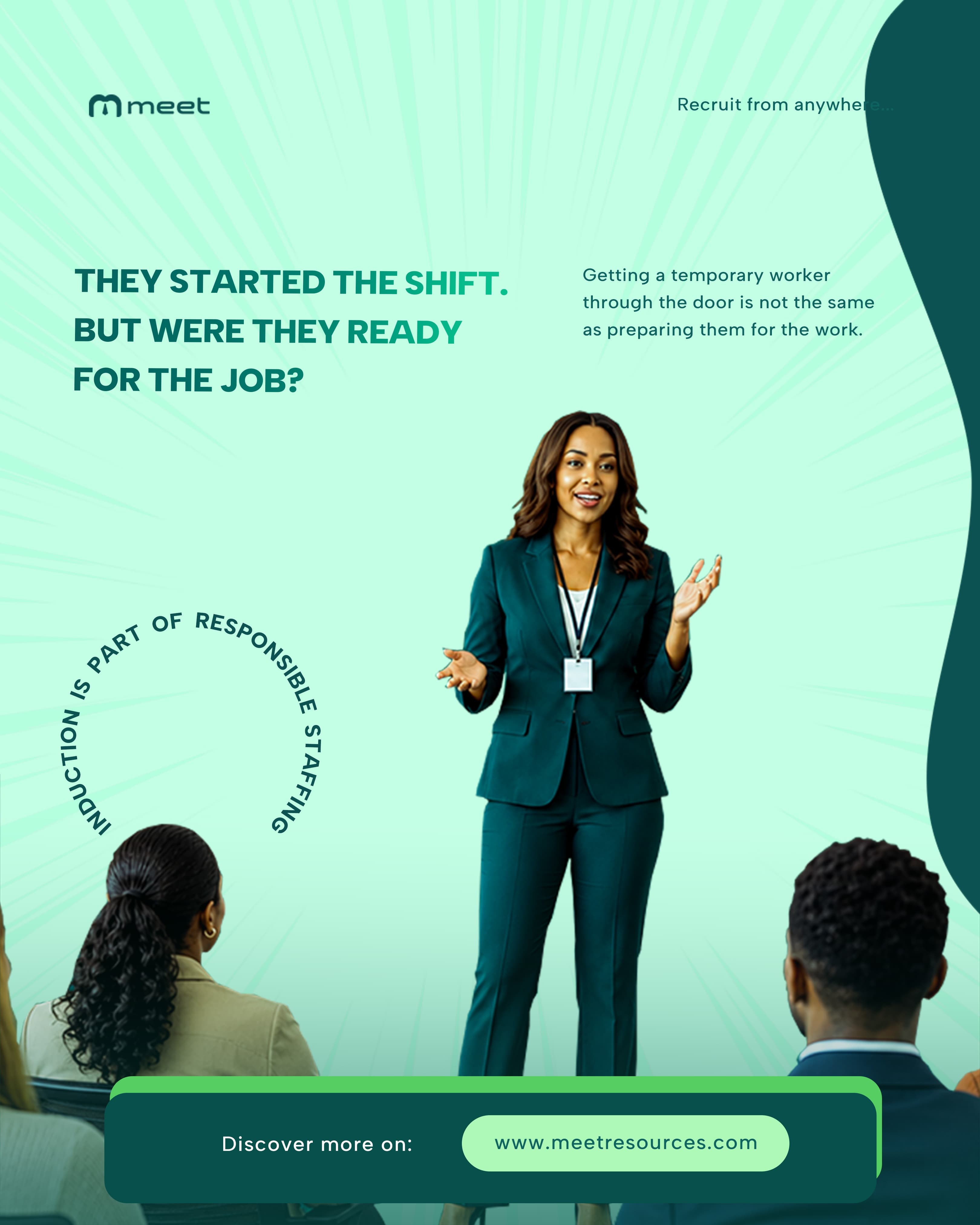
Imagine a temporary worker arriving at a supermarket in Manchester at 6:00 am for an early stock-replenishment shift. They have completed the recruitment process, their right-to-work requirements have been handled, and the agency has confirmed the assignment. They arrive on time, meet a supervisor at the staff entrance and are shown where to collect a high-visibility vest. They are then told which aisle to work in and asked to follow another member of staff.
On the surface, everything appears ready. But then the questions begin. Has the worker been told what to do in an emergency? Do they know how to report a hazard? Have they been shown the correct manual-handling procedures? Do they know which equipment they are authorised to use? More importantly, do they know who to approach if they are unsure about something?
This is where responsible staffing becomes more than simply getting someone through the door.
Starting a Shift Is Not the Same as Being Ready
A temporary worker can be fully recruited, placed and scheduled and still not be properly prepared for the workplace they are entering. Starting a shift and being ready to perform the job safely and effectively are not necessarily the same thing. The Health and Safety Executive (HSE) makes clear that agency and temporary workers should receive appropriate information, instruction, training and supervision, while hirers using agency workers have responsibilities for their health and safety in the workplace. In many situations, the end-user business has day-to-day responsibility because it directs the work and controls the workplace.
That distinction matters because temporary workers often enter workplaces where they do not know the systems, people, routines or risks as well as permanent employees do. A permanent employee may already know where the fire exits are, how a particular piece of equipment should be used, who the shift supervisor is, how incidents are reported and what to do when a procedure changes. A temporary worker may be encountering all of these things for the first time. Treating them as though they already understand the workplace simply because they have experience doing similar work elsewhere can create unnecessary risk.
Agency Workers Are New Starters Too
HSE guidance specifically recognises that agency workers may effectively be new starters within the organisation using their services. Hirers have obligations towards agency workers who are new to the workplace and should provide relevant information about the skills, qualifications, risks and controls associated with the work. The fact that a worker has been supplied by an agency does not remove the need for the hiring organisation to make sure the person understands the environment in which they will actually be working.
There is also important information that should be established before the assignment begins. Government guidance states that an agency should provide workers with information about matters including the start date, likely duration of the work, type of work, location, expected hours and relevant health and safety risks, as well as any experience, training or qualifications required. But providing this information is only one part of the process. Once the worker arrives at the workplace, the hirer still needs to make sure that the information is translated into practical understanding.
Workplace-Specific Questions Need Workplace-Specific Answers
Consider the supermarket scenario again. The worker may have been told before arriving that they would be replenishing stock. That describes the assignment, but it does not necessarily explain how that particular supermarket operates:
- Where should deliveries be moved?
- Which areas have restricted access?
- How should damaged stock be reported?
- What equipment can the worker operate?
- What happens if an emergency alarm sounds?
- Who is responsible for checking their work?
- What should they do if the task they were given changes during the shift?
These are workplace-specific questions, and they cannot always be answered by the recruitment agency because the agency does not control the day-to-day environment.
Good Induction Does Not Have to Be Complicated
Good induction therefore does not have to mean a long classroom session or an unnecessarily complicated onboarding programme. It can mean making sure that a worker receives the information, instruction and supervision necessary to understand the work they are about to perform. It can mean walking them through the relevant areas, explaining workplace rules, identifying hazards, confirming who they report to and making sure they understand the procedures that apply to their role. For higher-risk activities, it also means making sure the appropriate training and competence requirements have been addressed before the worker carries out the task.
This is particularly important when the work involves machinery, manual handling, hazardous substances, working at height, driving, care responsibilities or other activities where a misunderstanding can have serious consequences. HSE guidance emphasises the need to consider workers' competence and provide appropriate information, instruction, training and supervision. The appropriate level of induction will depend on the nature of the assignment and the risks involved, but the underlying principle remains the same: temporary should never mean unprepared.
The Agency and the Hirer Both Have a Role
The relationship between the agency and the hirer also matters. Responsible staffing works best when both sides understand what information needs to be shared before the assignment begins and what responsibilities remain with the workplace once the worker arrives. The agency may know the worker's experience, qualifications and assignment details, while the hirer understands the actual workplace, tasks, equipment and risks. HSE guidance encourages cooperation between the supplier and end-user business before the work starts so that responsibilities and relevant information are properly understood. Our guide on what to check before hiring temporary staff covers the questions worth asking up front.
Speed Should Not Replace Preparation
There is also a wider workforce-management lesson here. A temporary worker is often brought in because a hirer needs capacity quickly. Perhaps a supermarket has a seasonal increase in demand, a warehouse needs additional hands, a care provider needs additional staffing or a hospitality business is preparing for a particularly busy period. Speed matters, but speed should not replace preparation. The pressure to fill a vacancy or cover a shift should not become a reason to assume that the worker will simply "pick things up" once they start.
The first shift is therefore more than a start date. It is an opportunity to establish expectations, reduce uncertainty and help the worker understand how to operate safely and effectively within the organisation. A few minutes spent explaining the workplace can prevent hours of confusion later. A clear briefing can prevent a worker from making assumptions. A named supervisor can give someone confidence to ask a question rather than attempt something they do not understand.
A worker should not have to learn your workplace by making mistakes.
And preparation does not stop after day one. If duties, procedures or equipment change later in the assignment, the same principle applies. See The Assignment Changed. Did Your Temporary Workers Know?
Induction Is the Bridge
For hirers and recruitment agencies, this is one practical difference between simply supplying temporary labour and practising responsible staffing. The objective is not merely to ensure that someone arrives at the workplace. It is to create a clear bridge between "You've been assigned to this job" and "You're ready to do this job."
That bridge is induction.
At Meet Resources, we believe responsible staffing means looking beyond the vacancy. It means recognising the importance of preparation, communication and workplace readiness so that temporary workers understand the role they are entering and hirers have the support they need to manage their workforce responsibly. (If you are a worker, read what to expect on your first temporary shift.)
Because getting the right person through the door is only the beginning.
References
- HSE: Health and safety for gig economy, agency and temporary workers, roles of suppliers and end user businesses
- HSE: Does guidance for new starters also apply to agency workers?
- HSE: Provide information, training and supervision
- GOV.UK: Agency workers, basic information you should receive
- GOV.UK: Agency Workers Regulations 2010, guidance